We hope you will enjoy browsing on the new SIC Marking website. New features will be set up during the whole year 2012.
Material
Material
The following section illustrates different marking technologies used on several materials.
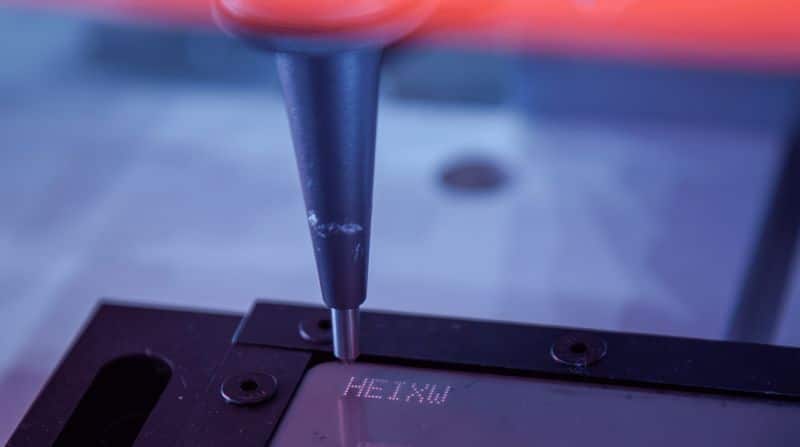
Dot peen markings were created using a e8 c153 machine equipped with a 120° stylus, with adjustments to parameters like :Stylus to Part Distance, impact force, speed, and stylus type.
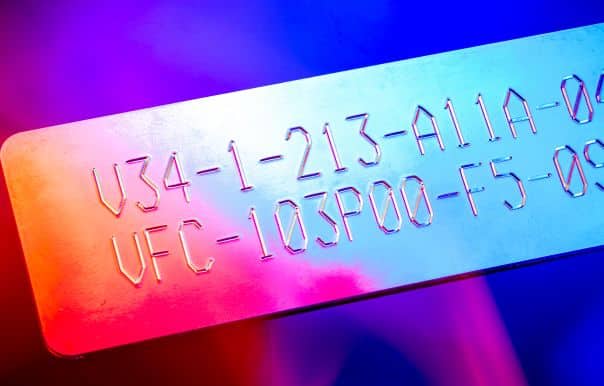
Scribing markings were made using a e8 i113 s equipped with a 30mm piston. Mark quality was optomized with parameters like : Stylus to Part Distance, pressure, and speed, stylus type
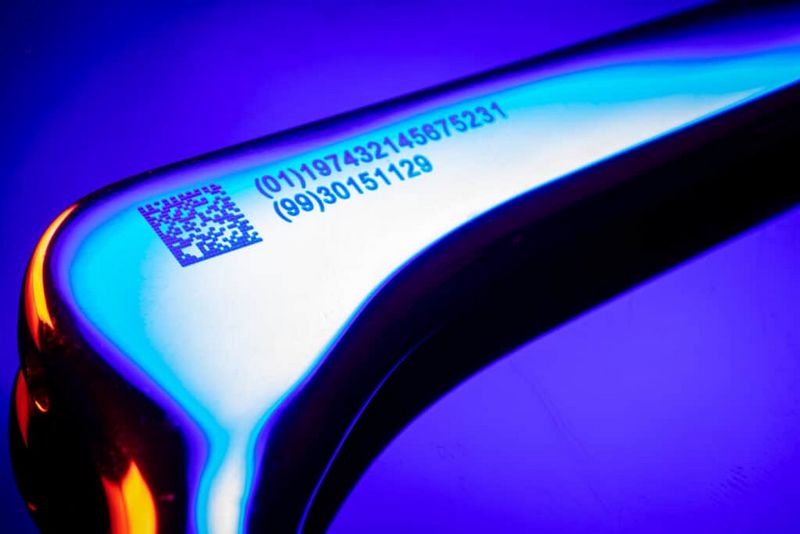
Laser markings were made with a c173 lg (20 watt) using a specific set of features (lens, source power…)and parameters (speed, power, frequency...)
Pictures of parts marked with each marking technology are found below.
- Steel marking:
- Stainless steel marking :
- Plastic marking:
- Brass marking :
- Titanium marking :
- Aluminum marking
- Copper marking :
- Painted steel marking:
- Marking on aluminum before anodizing:
- Marking on aluminum after anodizing:
- Marking on steel before galvanizing:
- Marking on galvanized steel :
Stainless steel marking
This type of stainless steel (also called Inox) is characterized by a presence of 11% min.of chromium. It is well known for its corrosion resistance, and is often used in industries like surgical instruments, and the food industry (tanks, sugar refineries,..).
See Sample of laser marking on a stainless steel pan

Plastic marking
Plastic marking applications are numerous in many industries, like household appliances, interior components motor parts in automotive industry, and many others. Mant well known plastics like PET, PP (Polypropylen), PE, or ABS can be marked, depending on the project requirements using laser, scribing or dot peen technology.
See sample of dot peen marking on plastic part.

Brass marking
Brass is often used for electrical, plumbing, household applications (valves, locks, handles...) and musical instruments. This material is easy to mark due its softness.
See sample of marking on brass plate.

Marking on Titanium
This material is used in the aerospace industry for the production of strong lightweight parts, in order to reduce global weight of airplanes, and thus reduce fuel consumption. Titanium is also incorporated in some mass market products like high end sports gear, and other sectors like surgical implants. Laser technology is very efficient and fits with a wide range of material specifications.
Marking on ceramic
Laser tyechnology is best suited for ceramic marking. Hereunder, ceramic teeth mold marked with our fiber laser. Main issue was the size of datamatrix code - very small -to be marked on a concave surface.

Copper marking
Copper is well known for its use in electrical wires, because the material has two main features: low hardness, and high conductivity. It is also commonly used for plumbing fittings. Hereunder, dot-peen marking used for labeling spare parts for maintenance inventory in railway sector.

Steel marking
We can mark most steel alloys up to the hardest ones (62 Hrc).
This material is used in many industries, such as automotive for car bodies, heavy equipment like truck and agricultural machines, energy sector …
See sample of dot peen marking on steel plate

Marking on galvanized steel
See Sample of marking on galvanized steel plate

Aluminum marking
This material is valued for its low density and resistance. The automotive industry produces large quantity of aluminum parts like motors, and car frames. Aircraft manufacturers also widely integrate aluminum parts in their designs.
Aluminum is present in many other industries : transportation (trucks, railway cars), construction (windows, doors..), etc...
See sample of marking on aluminum part.
Marking on aluminum before anodizing
Obtaining a high quality mark on this material is challenging because contrast is difficult to create, in comparison with the aluminum after anodizing.
See sample of marking on aluminium plate before anodizing.

Marking on aluminum after anodizing
Anodizing increases some fundamental characteristics of the material like surface hardness and corrosion resistance. This treatment is also well known for coloring the aluminum, making parts more attractive for users. The marking operations removes a very thin layer in order to show the core aluminum, providing high contrast .
See sample of marking on aluminum plate after anodization

Painted steel marking
As the material is coated with a painted layer, adjustments to impact force (dot peen), pressure (scribing) or the speed (laser).
See sample of marking on painted steel plate

SIC Marking will be present at this exhibition with our local partner UMS.