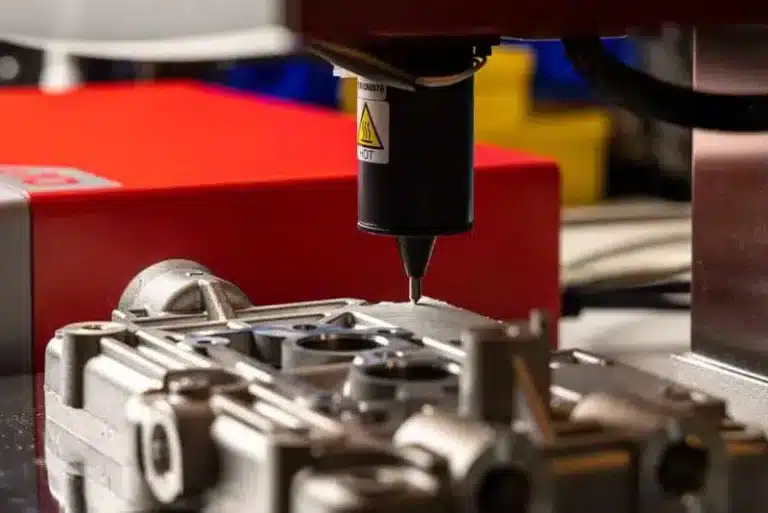
A part that cannot be traced can quickly generate significant costs, whether due to production line stoppages, scrap, non-compliance, or product recalls. Laser marking addresses this challenge with a simple principle: permanently marking clear, readable, and usable information directly on the part, ensuring it remains identifiable throughout its entire lifecycle.
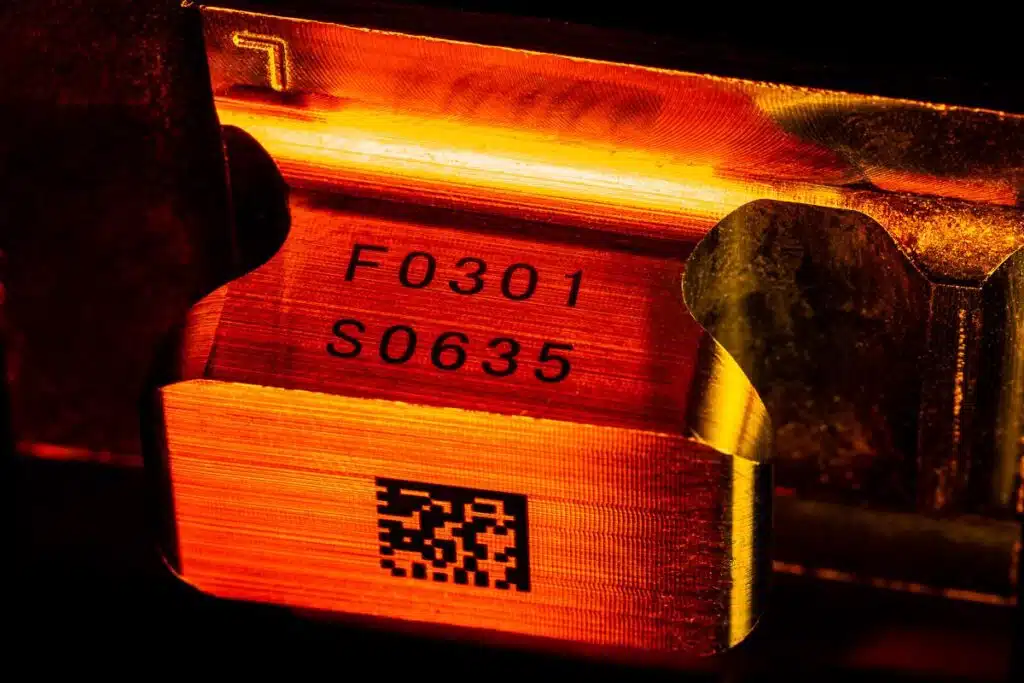
Laser technology performs direct part marking without mechanical contact or consumables, delivering a level of precision fully aligned with modern traceability requirements. It enables the marking of critical information that remains legible over time, such as serial numbers, references, DataMatrix or QR codes, logos, and specific identifiers.
Designed for demanding industrial environments, laser marking remains reliable even after abrasion, thermal treatments, exposure to solvents, or harsh operating conditions. The objective is always the same: to guarantee clear, repeatable, and durable identification, regardless of real-world constraints.
Laser marking integrates directly into the production process, either as a standalone station or fully in-line, allowing it to keep pace with industrial production without disrupting operations. This integration helps reduce downtime, limit errors, and maintain consistent quality, even at high production rates.
When connected to ERP or MES systems, laser marking becomes a key element of real-time traceability, ensuring continuity between the information marked on the part and the associated production data.
With no ink and no solvents, laser marking significantly reduces consumables and waste compared to traditional marking methods. Its low energy consumption and clean operation make it particularly well suited to sustainable manufacturing initiatives, while maintaining a high level of industrial performance.
Metals, engineered plastics, composites, anodized aluminum, titanium… laser marking adapts to the characteristics of each material to achieve the required contrast while preserving part integrity. Parameters such as power, frequency, speed, wavelength, and pulse type are defined according to the application, material, and desired result, ensuring stable and legible markings.
At SIC MARKING, our laser solutions are based on extensive testing and an application-driven approach, enabling us to propose the most relevant configuration according to your production constraints, accessibility requirements, and cycle times.
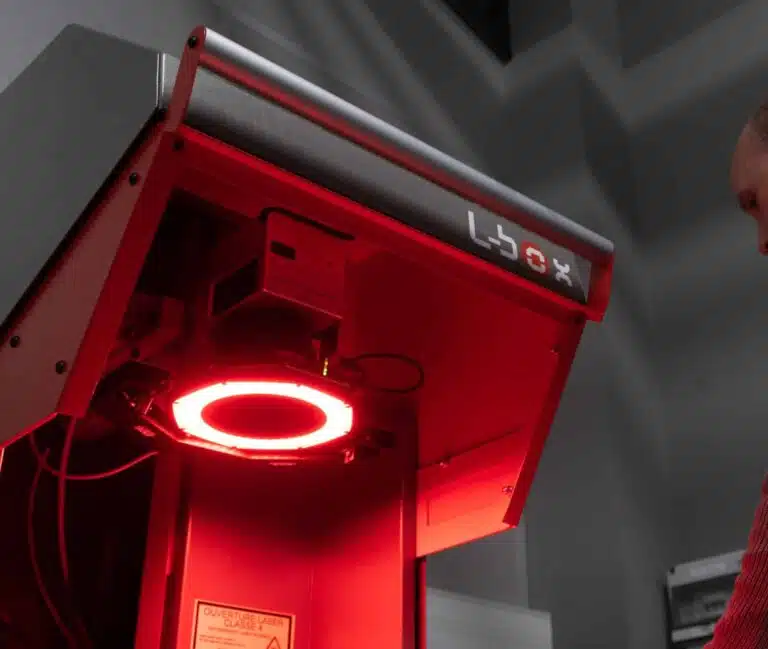
Ideal for large parts or dedicated workstations, standalone stations provide stable, controlled, and secure marking in an industrial environment.
Designed for in-line production, these systems integrate into automated cells or conveyors, enabling continuous marking and end-to-end traceability.
Developed to access hard-to-reach areas or perform on-site operations, portable solutions maintain precise laser marking even when parts cannot be easily moved.
Laser marking is not just a marking technology. It is a lever for industrial reliability, securing part identification, streamlining quality processes, and strengthening traceability across the entire value chain, from production to after-sales support.
Need information ?
Contact one of our experts !