Laser marking is a benchmark technical solution for meeting traceability, compliance, and efficiency requirements in industrial processes.
It addresses the marking needs of many industries – including aerospace and space, the food and beverage industry, the medical sector, and the automotive industry – as well as the specific characteristics of a wide range of materials such as metals, plastics, and composites.
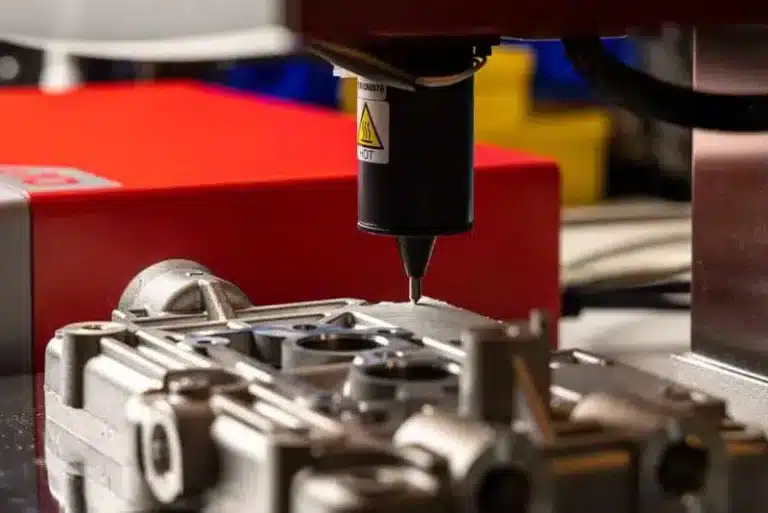
Laser technology delivers a permanent mark that is precise and perfectly readable, without altering the mechanical integrity of the parts.
This permanent marking provides an optimal balance between engraving depth, contrast, and aesthetic appearance.
Integrated into production lines, laser marking plays a major role in process automation.
It enables the synchronization of marking with the production flow, reducing downtime, errors, and operating costs while increasing productivity.
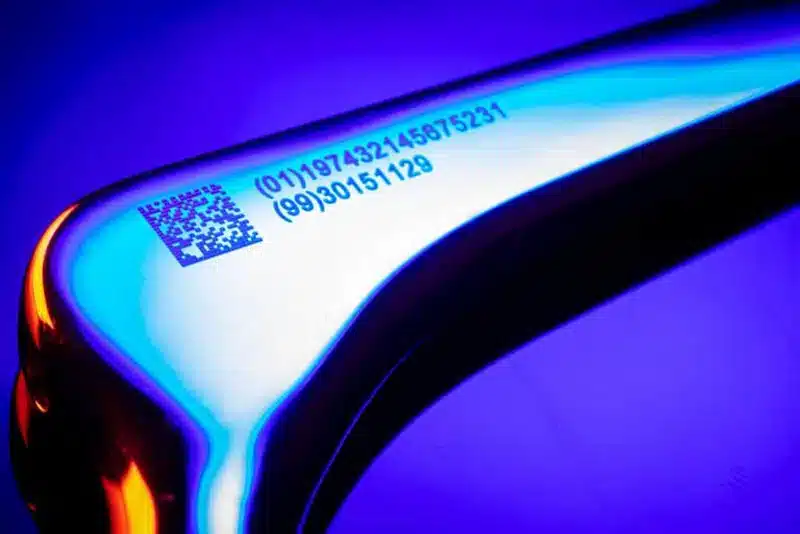
In addition, laser marking ensures the indelible marking of critical data (serial numbers, DataMatrix or QR codes) and guarantees compliance with traceability standards (CE, UDI). Consistent marking quality and the absence of consumables make laser marking a solution that is both high-performing and sustainable for industry.
To ensure repeatable production and compliance with the most demanding quality requirements, SIC MARKING builds its laser expertise on extensive preliminary testing.
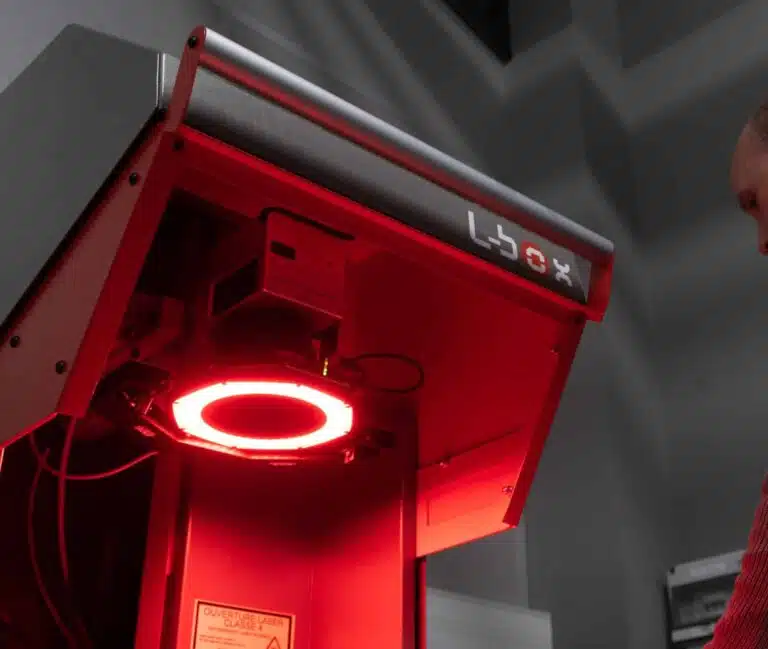
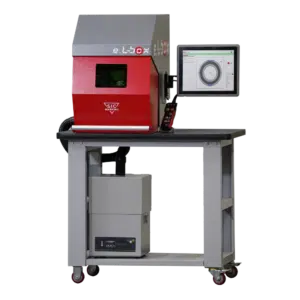
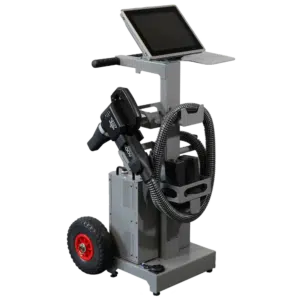
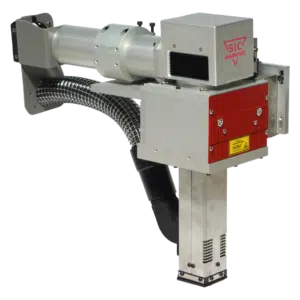
Depending on customer processes, SIC MARKING offers both integrable laser marking systems and standalone laser engraving machines.
Industrial laser marking meets several essential requirements:
Traceability and part identification
Permanent laser engraving applies unique information directly onto the material surface – such as serial numbers, DataMatrix or QR codes, logos, or part numbers.
These marks ensure automatic data capture and complete traceability throughout a part’s life cycle.
The mark remains permanently readable, even when exposed to abrasion, solvents, or harsh environments.
Permanent laser marking also enables full integration of production data into ERP and MES systems through automated decoding of the marked information.
Regulatory compliance and quality standards
European and international regulations – CE marking, UDI for the medical sector, AS9100 for aerospace and space, as well as ISO 13485 for medical devices – require permanent marking that remains perfectly readable and traceable throughout the product’s entire service life.
These technical requirements call for an engraving depth that is tightly controlled, a defined contrast, and high repeatability.
The mark must remain perfectly readable even after heat treatment, galvanizing processes, or exposure to chemical agents.
Laser marking allows precise adjustment of every essential parameter – power, frequency, speed, and focus – to achieve optimal contrast on materials such as stainless steel, titanium, aluminum, or plastics, ensuring long-lasting compliance.
Optimization of manufacturing processes
The inline integration of laser marking consolidates previously separate processes into a single operation coordinated with the production flow.
This reduces downtime and maximizes overall productivity.
In addition, the inherently repeatable precision of laser marking delivers consistent quality without the need for frequent adjustments.
This lightens the operators’ workload and lets them focus on higher-value tasks.
Installing an automated laser marking station, connected to ERP or MES systems, results in fewer reworks and improved real-time traceability.
This has a positive impact on OEE metrics as well as on compliance with industry standards.
Because laser marking requires no consumables (inks, ribbons, solvents), operating costs drop immediately.
Furthermore, the long service life of laser sources reduces replacement frequency and maintenance requirements.
Durability and environmental responsibility
With no chemical additives or solvents involved, laser marking eliminates all consumables (such as inks or ribbons) along with the associated waste.
Fiber laser technology offers a service life that often exceeds 50,000 operating hours, reducing component replacement and the generation of electronic waste.
It produces neither liquid waste nor significant emissions, which lowers waste treatment costs and simplifies compliance with environmental regulations.
On the production floor, laser marking integrates easily into automated manufacturing lines and stands out for its controlled energy consumption – typically just a few hundred watts, depending on the power used.
Flexibility and material compatibility
The laser source settings are tailored to the specific characteristics of each material: steel, stainless steel, aluminum, titanium, and composite materials retain their mechanical properties while ensuring long-lasting mark readability.
Process parameters – power, frequency, pulse duration, repetition rate, and scan speed – can be customized to minimize the heat-affected zone and preserve mechanical tolerances.
With precise laser settings, it is possible, for example, to achieve optimal contrast on anodized aluminum without damaging the surface layer, or to prevent yellowing on engineering plastics.
Aesthetics and brand identity
Laser marking stands out for its extreme precision and exceptional engraving quality. The fine laser beam makes it possible to produce sharp lettering, detailed logos, and even microtext that remains perfectly readable at sizes below one millimeter. Depending on the system configuration, marking resolution reaches an exceptional level – ideal for applications where readability and durability are critical.
On materials such as stainless steel, anodized aluminum, or titanium, industrial laser marking produces precise, durable contrast and opens up a wide range of aesthetic possibilities.
This process delivers a uniform, high-quality appearance, valued for technical components and premium design elements alike.
Because laser marking requires no consumables, consistency in series production is guaranteed: the depth, shade, and texture of the mark remain identical.
This reduces reworks, maintenance costs, and scrap rates – a major advantage for industrial manufacturing.
A high-quality laser mark strengthens the perceived value of the product.
A precisely engraved logo on a visible part provides a premium finish and showcases the manufacturer’s technological expertise – a decisive advantage in demanding sectors such as aerospace and space, watchmaking, the medical sector, and precision electronics.
For metals, plastics, and specialty materials, laser marking must ensure optimal compatibility between the laser and the material.
It must deliver a permanent mark that withstands wear, corrosion, and high temperatures, while providing excellent contrast on polished or matte surfaces – without weakening the material.
The choice of laser wavelength and power (fiber, UV, or green laser) is critical to preserving material integrity and ensuring reliable industrial traceability, while also delivering a refined appearance and compliance with legal standards.
our solutions
Contact us
Need information?