Industrial traceability is structured around three complementary levels:
upstream traceability, which enables the identification of the origin of raw materials, components, and suppliers;
internal traceability, which records transformation operations, machines used, and production parameters within the industrial facility; and
downstream traceability, which ensures the tracking of batches or individual units through to end customers and field applications.
Today, traceability is considered a strategic pillar of performance and industrial compliance.
It makes it possible to document the origin of components, facilitate audits, and reduce legal risks. It also enables the rapid isolation of incidents, the implementation of targeted recalls, and the continuous improvement of processes through the structured use of data derived from identification and production.
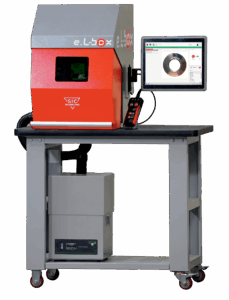
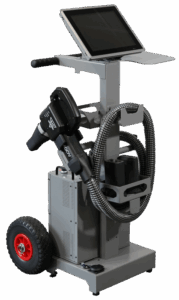
To address industrial parts traceability challenges, SIC MARKING relies on complementary technological building blocks, covering physical part identification, permanent marking, identifier reading, and integration into production environments.
This comprehensive approach is based more specifically on:

Industrial traceability relies on complementary technological building blocks that ensure identification, tracking, and the effective use of information throughout the part lifecycle.
These building blocks form the operational foundation of any reliable traceability system by linking the physical part to its associated industrial data, from manufacturing through inspection and operational use.
The technological building blocks of industrial traceability are based on:
These interdependent building blocks ensure data quality and data reliability at the source, independently of software layers dedicated to governance and long-term archiving.
Without reliable and unambiguous identification, visibility over a part’s history quickly deteriorates: it becomes impossible to link a non-conformity to a specific manufacturing operation or to effectively isolate an affected batch.
When the identifier is stable, unique, and readable by automated systems, analysis times are significantly reduced and investigations become actionable at an industrial scale.
The identifiers used in industrial traceability can take different forms depending on technical constraints and tracking objectives:
The choice of identifier directly determines the precision of traceability and the ability to leverage associated data.
Choosing between unit identification and batch identification primarily depends on the component’s level of criticality and the consequences of potential failure.
When safety or compliance is at stake, unit identification enables part-by-part tracking and granular traceability, facilitating corrective actions and highly effective targeted recalls.
Conversely, in mass production environments with interchangeable parts and homogeneous risk levels, batch identification may remain relevant by limiting costs and simplifying workflows.
A hybrid approach is frequently adopted, combining batch traceability for standard components and unit identification for critical elements, in order to balance risk control with industrial constraints.
Permanent marking makes the identifier inseparable from the part, ensuring continuity between the physical medium and the digital data throughout the entire lifecycle.
2D codes engraved directly on the part enable reliable unit identification and automated reading in production, an essential condition for reconstructing an actionable documentation chain and managing targeted recalls.
To fulfill this role, the marking must maintain long-term readability despite wear, post-processing treatments, and the operating environment.
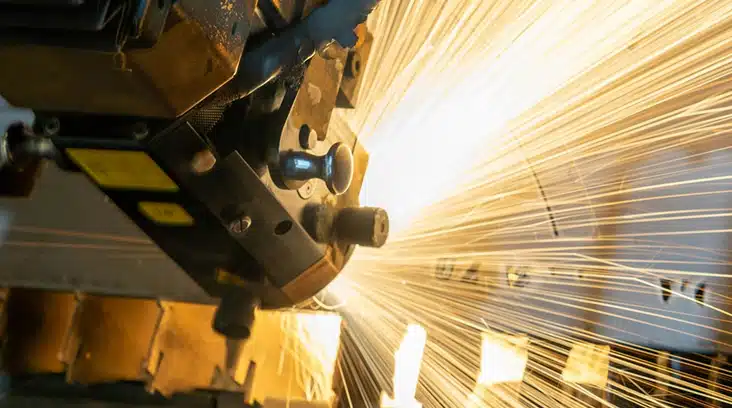
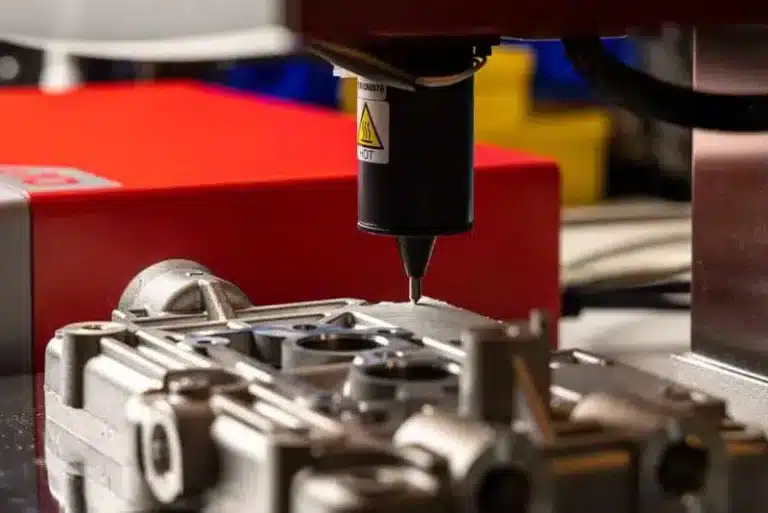
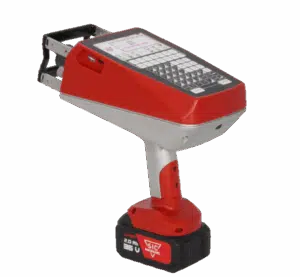
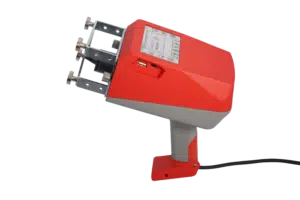
Its definition (content, format, positioning) and the associated marking technology – laser marking, dot peen marking, or scribing – are selected according to the material, constraints, and reading requirements, with the objective of repeatability and reliability in production.
Designed from the product development phase and standardized in both format and positioning, marking secures traceability and prevents future disruptions in identification.
Reading and re-reading of identifiers form the cornerstone of industrial traceability: they transform the marking (serial number, 2D code, DataMatrix) into actionable data, ensure continuity between the physical part and information systems, and guarantee the reliability of production controls as well as after-sales operations.
By combining automated reading with manual verification, they secure the entire traceability chain and the ability to respond effectively to audits.
Reading must enable immediate validation of marking, automatic association of the part with its production parameters, and, if needed, trigger conditional actions (sorting, rejection, rework).
The industrial integration of marking and reading involves embedding these functions at the heart of production processes to ensure repeatability, reliability, and safety, without compromising throughput or quality.
It requires precise synchronization between the part, marking, and reading, as well as a reliable interface with information systems to link each identifier to its digital history.
This integration applies to manual workstations, robotic cells, and automated production lines alike, enabling immediate validation of the identifier after marking and isolation of non-conforming parts before continuing the process.
A well-executed integration helps reduce re-entries, minimize human errors, streamline workflows, and ensure traceability continuity throughout the entire process.
Industrial traceability goes beyond a simple documentation requirement: it addresses multiple, cross-functional challenges.
To be effective, traceability relies on a coherent technical chain – identification (serial number, DataMatrix, unit or batch identifier, product reference, manufacturing date, team code), durable marking, reliable reading, and data utilization – which transforms production information into traceable and archived evidence, thereby reducing regula
In regulated industrial sectors, traceability constitutes a structuring compliance requirement. It requires the ability to document the origin of components, manufacturing operations, inspections performed, and the links between batches and units, in order to demonstrate compliance during customer or regulatory audits. Depending on the sector and product criticality, requirements may involve different levels of granularity, data retention, and unit-level or batch traceability. These obligations translate into specific technical and organizational constraints: durable permanent marking resistant to usage conditions, unit identification or batch identification according to risks, and interconnected industrial systems (MES, ERP, quality) to centralize evidence and history. Traceability thus relies on a coherent chain from physical part identification to the structured use of data derived from identification and production.
During a customer or regulatory audit, traceability is a central element of compliance evidence: the manufacturer must be able to link each delivered product to its manufacturing dossier, quality inspections, and equipment used, with complete, timestamped, and tamper-proof records.
This capability relies on industrial information systems capable of quickly providing the genealogy of parts and batches, supplier certificates, and associated corrective actions. Insufficient documentary traceability exposes the manufacturer to major non-conformities, operational restrictions, or product recalls, whereas a structured system based on reliable identification, actionable reading, and secure data archiving reduces audit times, controls risks, and preserves long-term compliance.
Traceability is crucial in the event of an incident, as it allows for rapid identification of the source of a failure and precise containment of its impact.
By leveraging structured links between parts, batches, and serial numbers, accessible through industrial systems, teams can isolate affected references, production areas, and deliveries based on reliable, timestamped histories. This capability determines the effectiveness of corrective actions, compliance with regulatory deadlines, and the limitation of financial and reputational impacts.
Unit identification of critical components is a prerequisite for any risk management strategy: assigning each part a permanent identity through durable marking ensures long-term readability and a reliable link between the physical identifier and the digital records.
This level of granularity is essential for analyzing failures, calculating reliability metrics, and implementing targeted preventive actions.
By associating process data – machine parameters, inspections, manufacturing conditions – traceability enables the identification of critical areas, anticipates defect propagation, and guides inspection and maintenance efforts.
The ability to conduct a targeted recall relies on a precise link between the part, its batch, and the logistics flows, from manufacturing to delivery.
A structured traceability, based on reliable identification and rapid reading capabilities, allows the exact scope to be defined, reduces costs, and limits operational and reputational impact. Non-conformity management then relies on digitized and interoperable processes, ensuring traceability of decisions, corrective actions, and communications with relevant parties.
Traceability enables quality to be grounded in objective evidence by linking each part to production parameters and the inspections performed, making internal and external audits based on actionable histories rather than declarative summaries. By relying on unit identification, quality and process teams can analyze production data in detail, apply targeted statistical methods, and identify the root causes of non-conformities, thereby improving process repeatability and stability.
Traceability thus becomes a lever for continuous improvement, reducing non-quality costs and enabling production data to be rapidly transformed into operational corrective actions, with a direct impact on industrial performance and risk management.
Traceability serves as an operational line of defense against counterfeiting by linking the physical identity of parts to verifiable digital evidence, making it both an industrial tool and a legal lever in case of investigations or disputes.
It relies on a combination of durable marking, standardized unit identifiers, and timestamped data, enabling the creation of an actionable chain of evidence throughout the product lifecycle.
In critical sectors, this approach is reinforced by marking robustness requirements and structured supplier inspections, while the combination of visible and technical verification mechanisms, coupled with reading devices and validation both in production and in the field, significantly reduces the risk of introducing counterfeit parts.
In case of suspicion, traceability also enables the rapid activation of isolation, analysis, and targeted action procedures, limiting operational, legal, and financial impacts.
Traceability allows for the rapid isolation of an incident by linking each part or batch to its manufacturing context, enabling targeted recalls and significantly limiting volumes, costs, and commercial impact.
It accelerates diagnosis, prevents extended production stoppages, and reduces scrap by precisely identifying affected parts. By analyzing historical data, traceability also becomes a lever for continuous improvement, facilitating root cause identification and the implementation of sustainable corrective actions.
The correlation between the part, the machine, and the process parameters directly improves industrial performance by providing precise visibility into the manufacturing history and the causes of efficiency losses.
By leveraging unit identification, standardized marking, and automated reading, traceability reduces manual errors, streamlines workflows, and accelerates production and logistics cycles. It also provides a foundation for maintenance and after-sales service, enabling failure anticipation, reduced downtime, and rapid resolution of customer returns through integration with industrial information systems.
The choice of marking technology depends on the identifier density, required durability, material, and production speed.
Laser marking is preferred for high-density identifiers and automated lines, dot peen marking for harsh environments, and scribing for simple markings readable by humans.
Our Solutions