case study

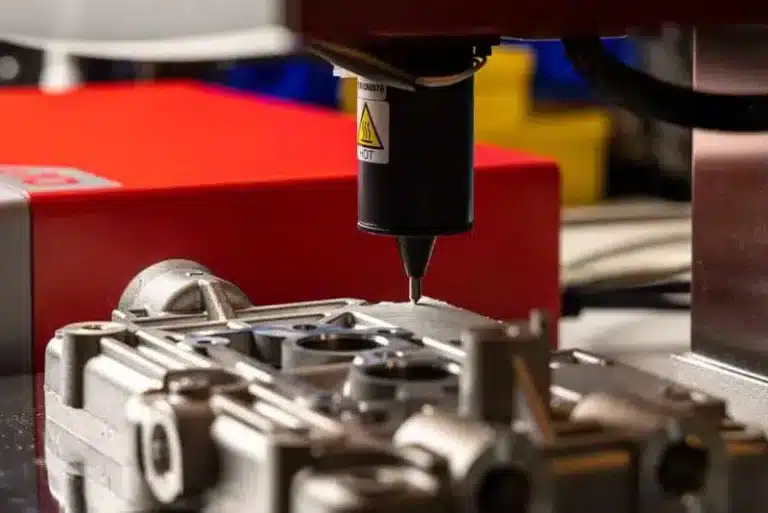
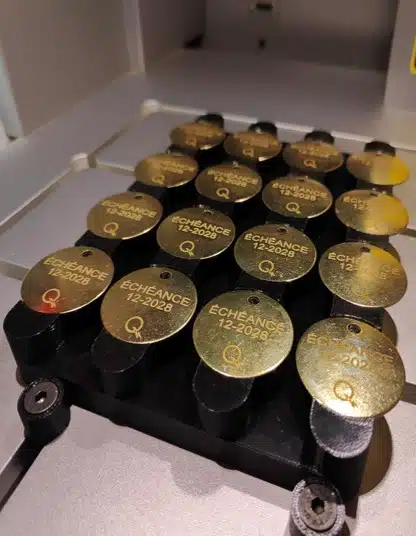
In the energy sector, the marking of signage parts and identification serves a critical function: guaranteeing traceability of equipment over the long term, under operating conditions that can be severe. At Hydro Québec, brass tags act as permanent identification carriers. Their marking must be high-contrast, time-stable and readable in real-world conditions, with no label and no consumable.
At the outset of the project, the challenge was not limited to marking quality: it also involved production throughput, a constrained environment and operator-workstation organization. The solution had to let a single operator sustain a steady pace, with no reliance on outside support, while guaranteeing consistent result quality on every cycle.
Brass, a smooth-surfaced material, has optical characteristics specific to laser marking: managing contrast and engraving parameters directly determine final readability. A poorly tuned configuration yields either a marking with insufficient contrast or a surface degraded by excess energy.
The target cycle set for this project was one tray per minute. To hit that target without creating idle time, the operator workstation had to be rethought around a simple principle: while the machine marks one batch, the operator preps the next. Running these steps in parallel calls for a second fixture, enabling alternating loading with no interruption to the laser.
Together, these constraints — material, throughput, footprint, autonomy — steered the choice toward a solution combining a laser system suited to the application and a fixturing layout engineered from the earliest design stage.
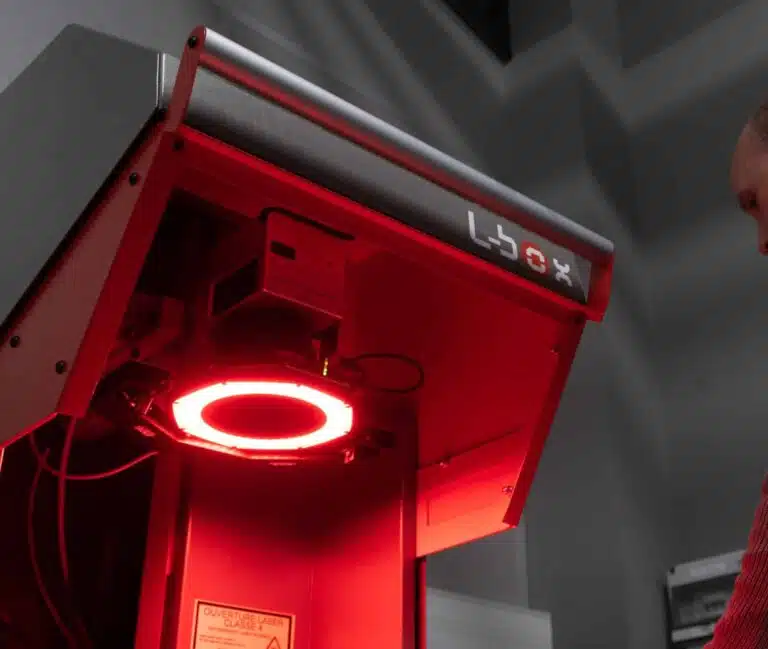
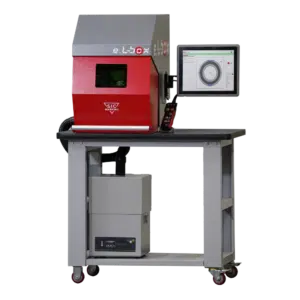
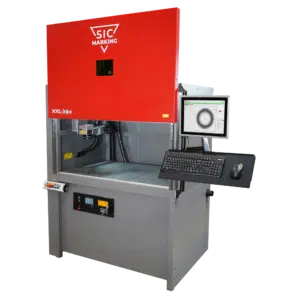
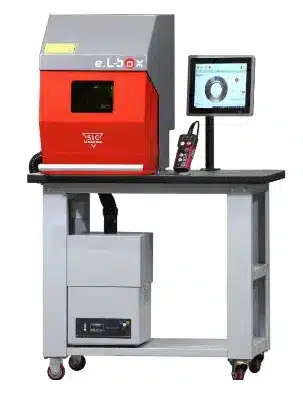
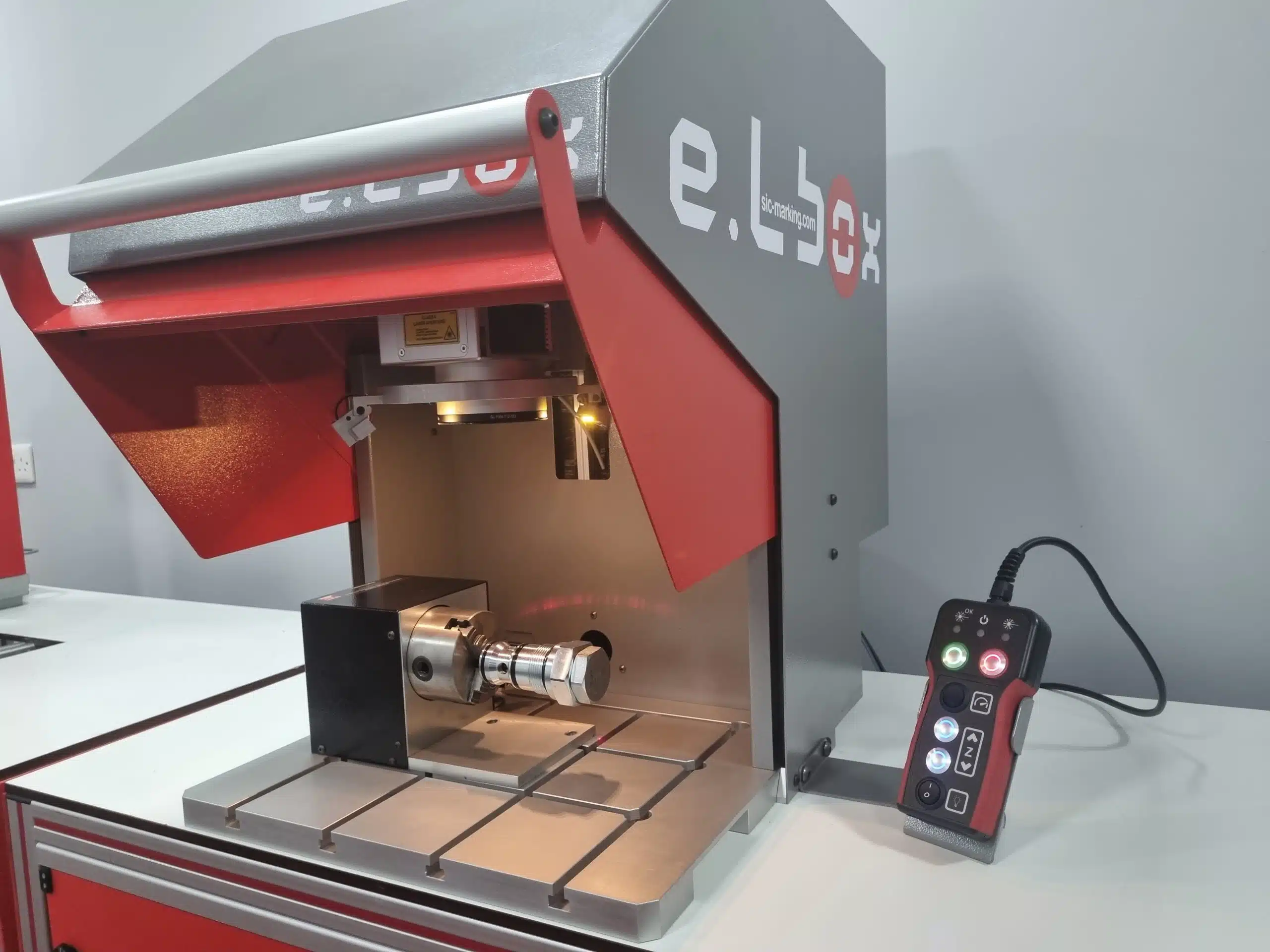
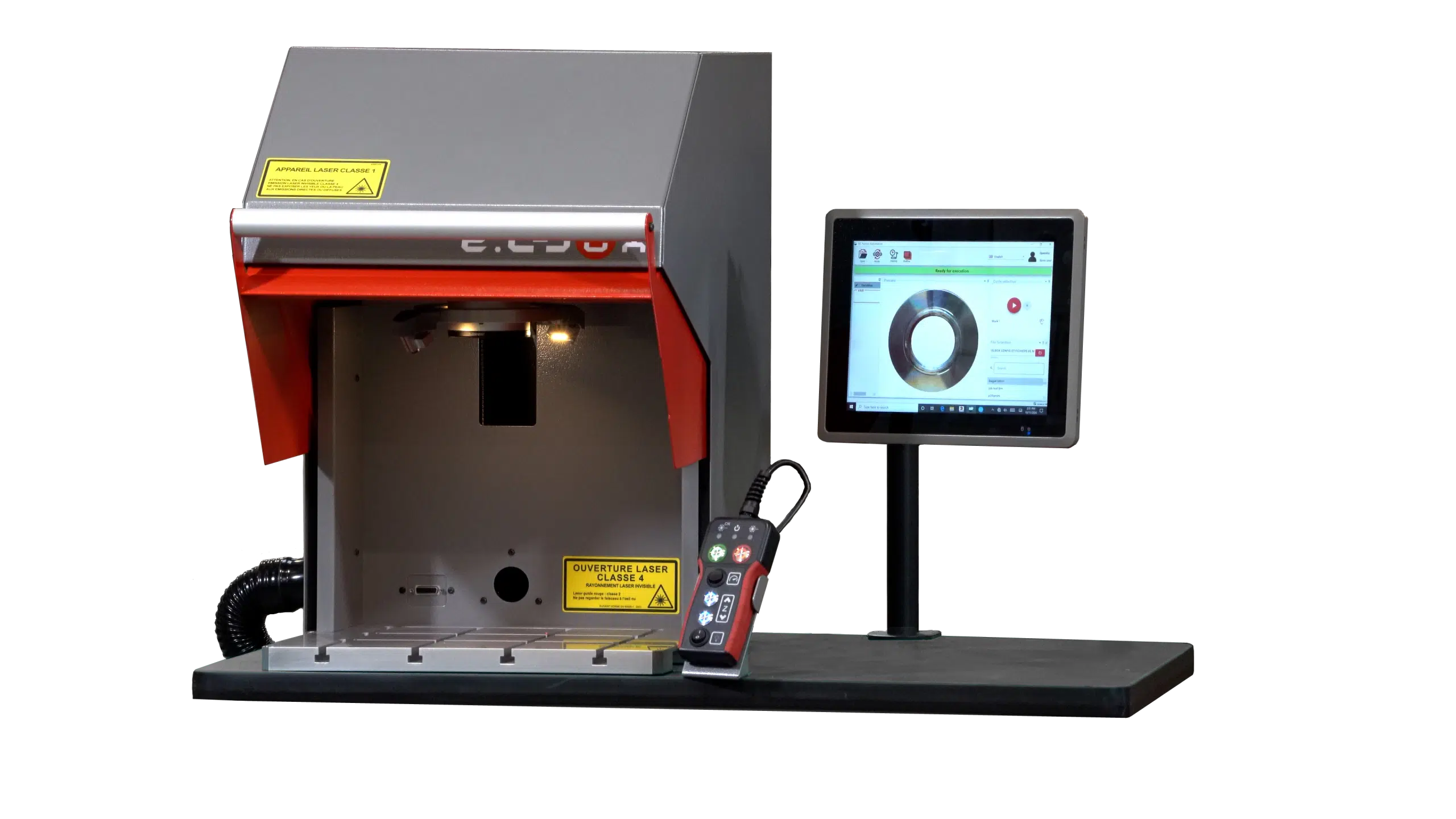
The selected solution is built on the e.L-BOX, fiber laser marking cell from SIC MARKING, in a standard-with-adaptation configuration.
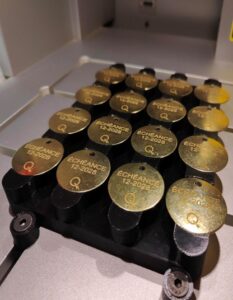
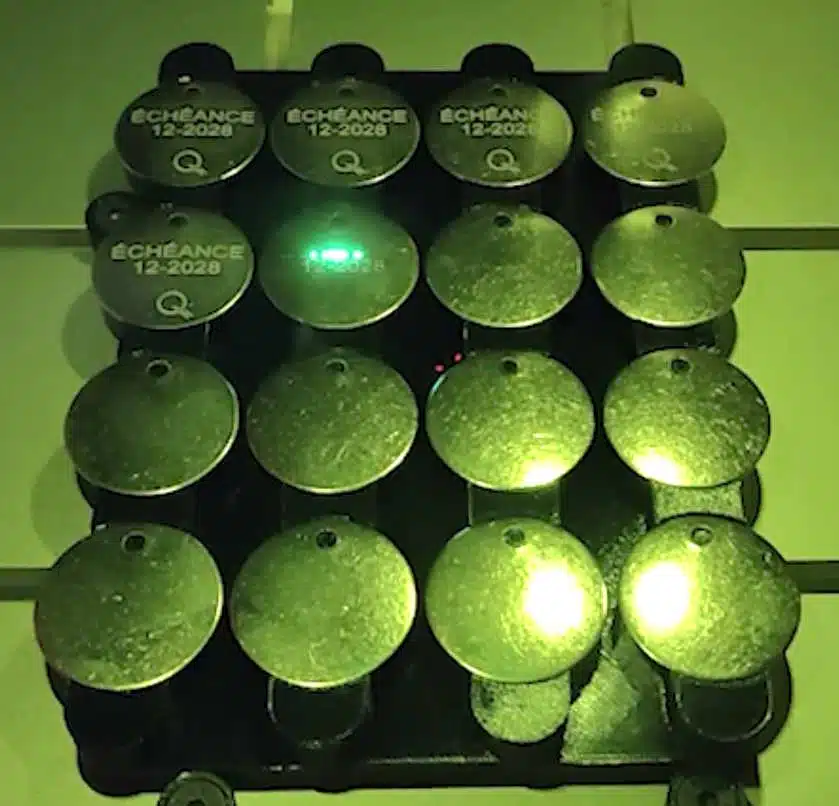
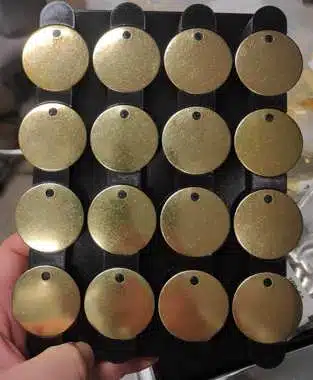
The system integrates a tray-based fixturing arrangement that delivers precise, repeatable positioning of the brass tags on every cycle.
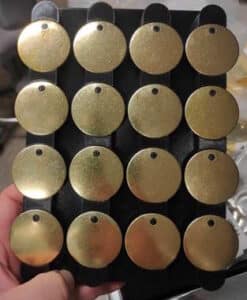
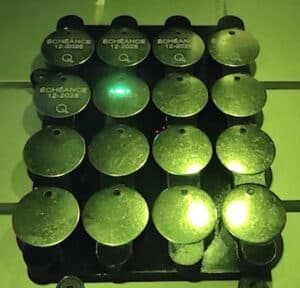
The core adaptation of the project relies on deploying a second fixture used in parallel with the laser cycle. While the machine processes the current tray, the operator loads and positions the parts on the next fixture. When the cycle ends, the swap is immediate: zero machine wait, zero throughput interruption.
The laser parameters were optimized for brass to deliver a marking with high contrast and durable readability, in line with the identification requirements of the energy industry.
Commissioning the e.L-BOX in this configuration met the throughput and workstation-organization objectives defined upstream of the project. The dual-fixture principle translates directly into a measurable reduction in handling time: loading parts no longer creates machine wait.
our solutions
Explore our products
Explore our flagship laser, dot peen and scribing marking systems — from portable machines and line-integrable modules to standalone marking stations.
Want to learn more?
Contact us!