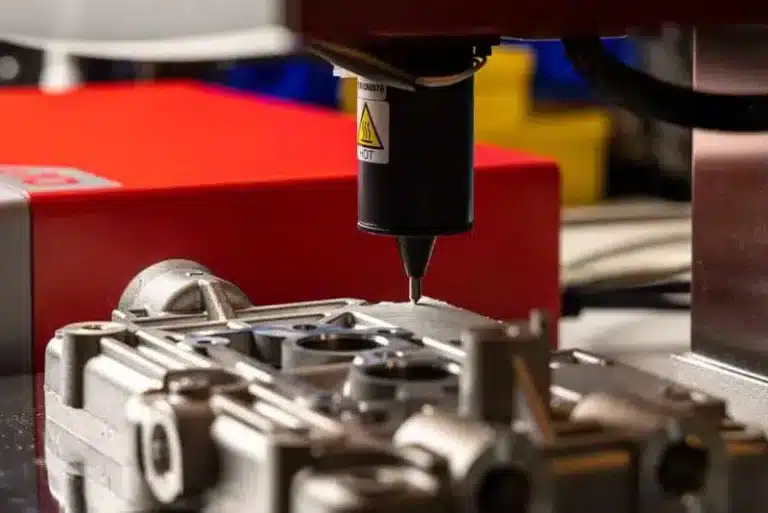
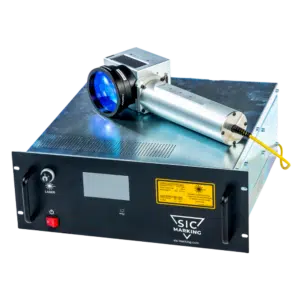
Aluminum laser marking applies permanent information directly onto aluminum parts for identification, traceability and production tracking. Serial numbers, part numbers, lot numbers, Datamatrix codes, QR codes, industrial logos and regulatory data can be marked with high accuracy on most aluminum alloys, whether raw, machined, anodized, painted or bead blasted.
Fiber laser technology delivers either high-contrast aluminum laser marking or deep laser engraving while preserving the mechanical properties of the part. Fast, accurate and non-contact, the process produces permanent marks that meet the traceability requirements of the aerospace, automotive, electronics, battery, rail and energy industries.
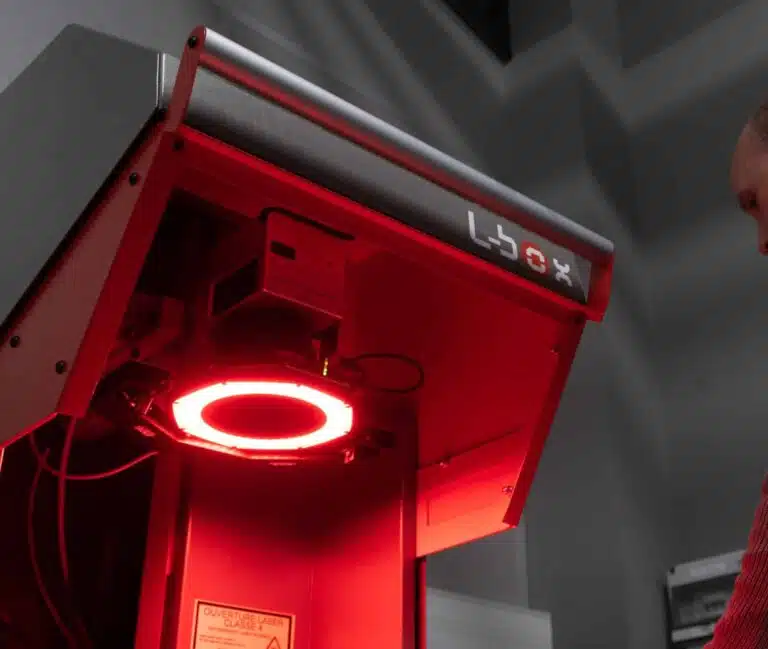
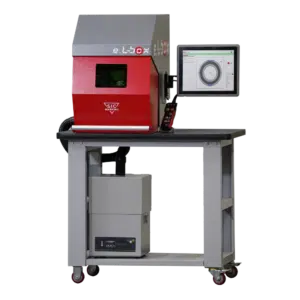
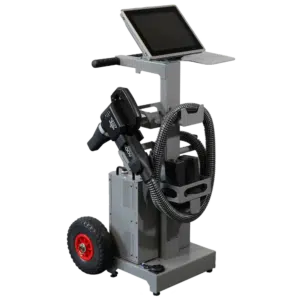
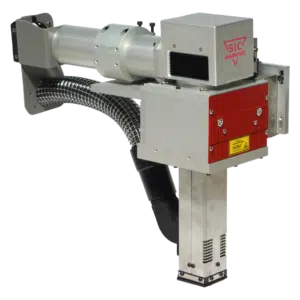
To cover every laser marking need for aluminum parts, SIC MARKING builds a full range of industrial laser marking solutions for the permanent identification and traceability of aluminum components, from standalone workstations to systems integrated into production lines and automated cells.
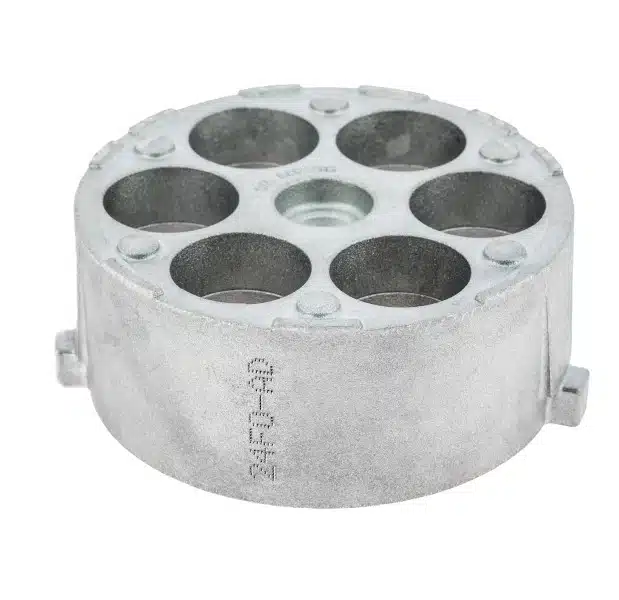
Aluminum part identification has become a critical requirement across many industries. Valued for its light weight, mechanical strength and machinability, aluminum is used in applications where component traceability, production tracking and permanent identification are now mandatory.
Accurate, fast and non-contact, aluminum laser marking embeds durable information directly into the material and adapts to different alloys and surface finishes. Serial numbers, part numbers, Datamatrix codes, QR codes and regulatory data can be marked with excellent accuracy to secure the traceability of aluminum parts throughout their entire life cycle.
Aluminum laser marking is based on the interaction between a high-precision laser beam and the surface of the part.
When the beam is focused on the aluminum, the light energy is absorbed and converted into heat, causing different changes in the material depending on the marking parameters applied.
Laser power, pulse frequency, scanning speed, focus and the number of passes all have a direct impact on the final result.
Depending on the application requirements, the laser can create a simple surface contrast, locally change the appearance of the aluminum or perform true aluminum laser engraving with material removal.
This flexibility covers both permanent identification needs and the most demanding requirements for industrial traceability, Datamatrix marking and durable engraving on aluminum parts.
Aluminum laser marking is compatible with the vast majority of alloys used in industry.
However, the way the material responds to the laser beam can vary with its composition, surface finish, treatment and the finishing operations performed after manufacturing.
The aluminum alloy family, along with any anodizing, paint or mechanical treatment, directly affects laser energy absorption, the resulting contrast, the engraving depth and the read quality of Datamatrix codes, QR codes and other traceability data.
By fine-tuning the marking parameters, SIC MARKING laser marking solutions deliver permanent identification suited to the majority of aluminum parts found in industrial environments.
The visual appearance of an aluminum laser mark depends directly on the interaction between the laser beam, the alloy and the surface finish of the part.
Depending on the selected marking parameters, the laser can produce varying degrees of contrast, a surface modification or a deep engraving, each generating a different visual result.
The apparent color of the mark is therefore not produced by adding pigment or ink, but by the physical changes the laser induces on the aluminum surface. The result varies depending on whether the part is raw, anodized, painted or treated, and on the readability, traceability and cosmetic requirements of the application.
The accuracy of aluminum laser marking makes it possible to apply a wide variety of information directly onto aluminum parts for identification, industrial traceability, quality control and production tracking.
Whatever information needs to be applied to the part, aluminum laser marking offers a reliable, accurate and permanent solution that meets the requirements of modern industrial traceability systems.
The fine laser beam can reproduce alphanumeric characters as well as Datamatrix codes, QR codes, industrial logos and regulatory information with an excellent level of accuracy.
Depending on the application, aluminum laser engraving can be used to provide unit-level component identification, streamline quality control operations, meet regulatory requirements or secure manufacturing, assembly and maintenance workflows.
The terms aluminum laser marking and aluminum laser engraving are often used to describe the same technology. In reality, these processes correspond to different modes of interaction between the laser beam and the aluminum surface.
Depending on the marking parameters applied, the laser can simply modify the surface appearance to create a perfectly readable contrast, or perform true engraving by material removal for reinforced resistance to mechanical stress.
The choice of process depends mainly on the application requirements, the type of aluminum, its surface finish, the operating conditions of the part and the expected level of durability.
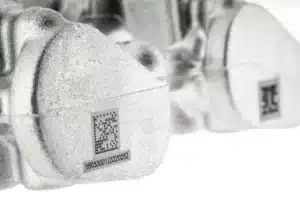
Contrast laser marking creates a visual difference on the aluminum surface without deep engraving into the material.
Under the action of the laser beam, the surface appearance is modified in an extremely localized way to reveal the required information. Depending on the aluminum alloy, its surface finish and the laser parameters, the mark can display a gray, dark or lighter contrast with excellent readability.
This technique is ideally suited to serial numbers, part numbers, industrial logos, Datamatrix codes, QR codes and nameplates, when graphic quality and marking accuracy are the top priorities.
Fast and non-contact, contrast aluminum laser marking is widely used on automated production lines to provide permanent component identification while preserving part integrity.
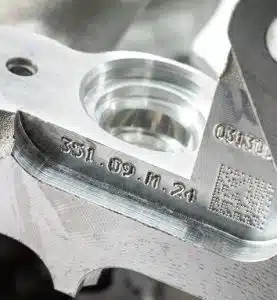
When parts are exposed to more severe operating conditions, the laser can be used to perform true aluminum laser engraving.
In this configuration, the beam delivers enough energy to melt and then vaporize a small, controlled amount of material. This ablation creates a recessed mark directly in the part, offering excellent resistance to abrasion, repeated handling, assembly operations and harsh industrial environments.
Engraving depth depends on laser power, the number of passes, the scanning speed and the characteristics of the aluminum alloy.
Laser engraving on aluminum is frequently used for manufacturer nameplates, mechanical components, housings, electronic enclosures, extrusions, aerospace parts and equipment requiring permanent identification throughout its service life.
Take a look at our flagship laser marking equipment, from Portable machines and Inline integrated modules to Standalone marking stations.
Contact us
Need information?
Get in touch with one of our experts!